Tyres and snow-day preparation
Electric vehicles pair high kerb weight (typically 1,800 kg to 2,600 kg) with immediate low-RPM motor torque and a low, centered battery mass. That low centre of gravity makes an EV remarkably composed in winter corners, provided the four postcard-sized tyre contact patches have the right rubber compound, load index and torque modulation for the road surface.
 Tyre compound selection
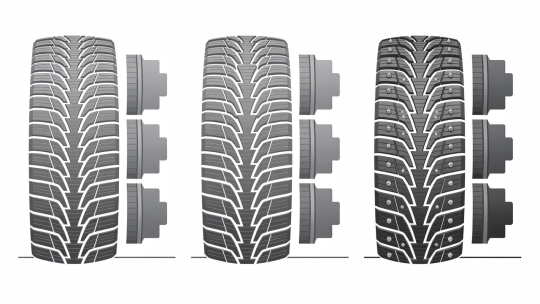
Central European 3PMSF vs Nordic Friction vs Studded
All genuine winter tyres carry the Three-Peak Mountain Snowflake (3PMSF) symbol under UNECE Regulation 117, but they are divided into three distinct regional families:
- Central European / Alpine Winter Tyres: Engineered for cold wet roads, occasional slush and motorway speeds (H or V speed ratings). Ideal where winter temperatures hover between +7 °C and -7 °C.
- Nordic Friction (Studless) Winter Tyres: Built with high-silica/canola cryo-soft compounds and dense micro-sipes (R, S or T speed ratings) that stay pliable at -30 °C and bite into packed snow and dry ice without metal studs.
- Studded Winter Tyres: Essential on coastal or mountain routes subject to wet glare ice around 0 °C to -4 °C, where water films form over ice; check local stud regulations and road tolls before fitting.
 Sizing & load ratings
XL/HL Load Indices, Cold Pressures & Wheel Downsizing
Because battery packs add 300 kg to 500 kg over an equivalent petrol car, always match or exceed the tyre Load Index on your door-jamb placard—typically XL (Extra Load) or the newer HL (High Load) standard certified by the ETRTO for heavy EVs.
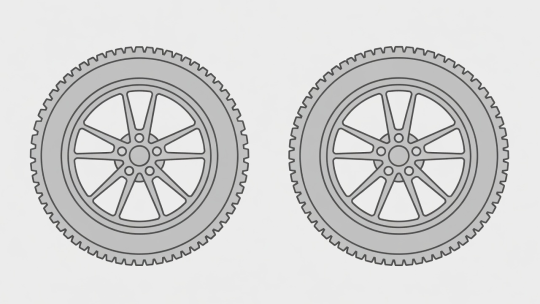
Whenever your vehicle’s type approval and brake calliper clearance allow, choose the smallest approved wheel diameter (for example, 18-inch or 19-inch winter wheels instead of 21-inch summer rims). A narrower tread with a taller sidewall cuts through slush with less aquaplaning risk, protects alloy rims against hidden frost potholes, and lowers aerodynamic and rolling energy use by 4% to 8%.
Regenerative Braking on Ice, 12V Batteries and Frozen Hardware
Preparing the car itself for deep snow involves three mechanical checkpoints that prevent both wheel slip and morning no-start surprises.
1. Modulate One-Pedal Regen on Glare Ice
In strong one-pedal driving mode, lifting your foot off the accelerator abruptly commands significant deceleration torque—exclusively on the driven axle in rear-wheel-drive or front-wheel-drive EVs. On polished ice or frosty bridge decks, sudden lift-off can momentarily unsettle the tyres before ABS/ESC steps in.
When roads are icy, select your vehicle’s dedicated Snow / Winter Mode or switch regenerative braking to its Low/Coasting setting so deceleration is blended smoothly across all four wheels via the hydraulic brake pedal.
2. Protect the 12V Auxiliary Battery & Friction Brakes
An EV with an 80% charged main high-voltage battery still cannot close its main contactors if the small 12V (or 16V) low-voltage battery under the bonnet drops below ~11.5 volts in a -25 °C cold snap. Have your 12V battery’s State of Health tested every three years before winter, and avoid third-party smartphone polling apps that repeatedly wake the vehicle overnight.
Finally, apply firm hydraulic braking once or twice on a clear, safe stretch at the end of wet-salted winter drives to wipe moisture and road salt off the brake discs and keep callipers moving freely.
Polar & Mountain Snow-Day Cabin Readiness Kit
- Tyre Pressure Recheck at Ambient Freeze: Tyre pressure drops by roughly 0.07 to 0.1 bar (1 to 1.5 PSI) for every 10 °C drop in outdoor temperature; inflate with the tyres cold outdoors, not inside a heated garage.
- Flush Door Handle & Wiper Prep: Disable automatic mirror folding; tap flush door handles with the heel of your gloved hand or pre-warm the cabin for 10 minutes before pulling.
- Clear Radar & Camera Sensors: Brush wet snow off the front bumper ADAS radar plate and check that the windscreen camera heater zone is clear before relying on adaptive cruise control.
- Carry Dedicated Recovery & Warmth Gear: Screw-in tow eye stored in an accessible pouch, compact snow shovel, pair of composite traction boards, -30 °C screenwash, thermal blanket and a 12V booster pack stored in the frunk (most EVs allow opening the frunk via exterior 12V jump leads if the auxiliary battery dies).